Satyabhama Majhi: Where Contemporary Art Meets Traditional Knowledge
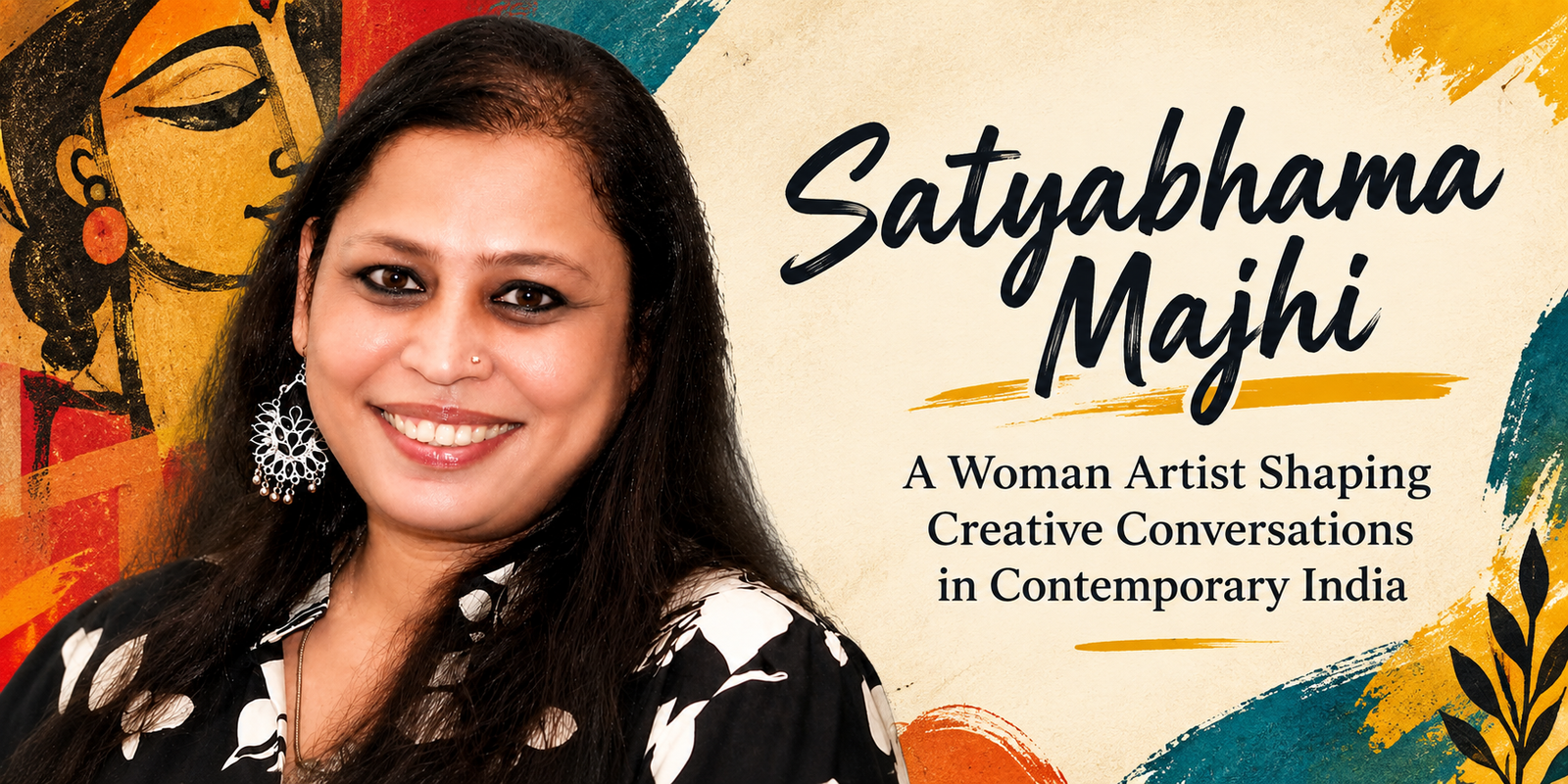
Contemporary art is often associated with experimentation, new materials and changing ideas. Yet many contemporary artists also look toward traditional knowledge for inspiration, finding ways to reinterpret cultural practices through a modern artistic language. Satyabhama Majhi, a contemporary visual artist, curator, social activist and community art practitioner based in Bhubaneswar, Odisha, has developed a practice that brings these two worlds together.
With an M.F.A. in Traditional Art, Majhi has a strong academic foundation in traditional artistic practices. Over the course of her career, however, she has expanded this foundation into a multidisciplinary practice involving painting, sculpture, installation, photography, mixed media, public art and community-based projects. Her work demonstrates how traditional knowledge can continue to influence contemporary artistic expression without being treated simply as something belonging to the past.
Tradition as a Starting Point
Majhi’s artistic journey illustrates that tradition and contemporary practice do not have to exist in opposition.
Traditional art provides a vocabulary of materials, forms, symbols and cultural ideas. Contemporary art, meanwhile, provides opportunities to reinterpret those elements in response to present-day experiences.
Majhi’s work occupies this space between inheritance and experimentation.
Her interest in traditional art is not limited to reproducing established forms. Instead, she explores cultural references through her own observations of communities, landscapes and changing social environments.
This approach allows traditional knowledge to become an active part of contemporary artistic enquiry.
Learning from Odisha
Odisha provides a particularly important cultural context for Majhi’s practice.
The state has a rich artistic heritage, with diverse traditions of painting, craft, sculpture, textiles, tribal visual culture and ritual practices. Majhi’s artistic engagement has developed within this environment while also extending into contemporary art.
Her work demonstrates an interest in understanding how cultural traditions relate to people’s everyday lives.
Rather than separating culture from contemporary society, she explores how traditions continue to influence identity, community relationships and people’s understanding of their surroundings.
The Importance of Indigenous Knowledge
One of the strongest examples of this approach is Majhi’s sustained engagement with the Dongaria Kondh community.
Her engagement with the community has extended for more than a decade and has involved observation and interaction concerning cultural practices, livelihood, indigenous visual traditions and relationships with nature.
The Niyamgiri hills provide an important context for this work.
Through her engagement with the region, Majhi has explored connections between landscape, culture, livelihood, spirituality and identity.
This experience has contributed to an understanding of traditional knowledge as something connected to everyday life rather than simply an artistic style.
Niyamgiri as a Cultural Landscape
For Majhi, Niyamgiri represents more than a geographical location.
The hills are connected with the lives, beliefs, livelihoods and cultural identity of the people who inhabit the region.
Her artistic exploration therefore considers the relationship between community and landscape.
This perspective is important because indigenous artistic traditions often cannot be fully understood when separated from the environment in which they developed.
Colours, symbols, patterns, materials and visual forms can carry meanings connected to particular places and cultural experiences.
Majhi’s work explores these relationships while bringing them into a contemporary artistic context.
Natural Materials and Traditional Practices
One of the most tangible connections between Majhi’s contemporary work and traditional knowledge is her experimentation with natural materials.
During her engagement with Niyamgiri, she explored naturally sourced materials such as chalk stone, charcoal, turmeric, geru soil and brown stone as sources for pigments.
These materials demonstrate how artistic practice can be connected directly to the environment.
Instead of relying exclusively on commercially manufactured colours, the artist can look toward materials available within the natural landscape.
This approach creates an interesting relationship between material and meaning.
The colour used in an artwork can carry an association with the land from which the material originates.
The Landscape Becomes Part of the Artwork
Majhi’s experimentation with natural pigments also changes the way landscape can be represented.
In conventional landscape painting, an artist might depict a mountain, forest or river on a canvas.
With the use of naturally derived pigments, the relationship becomes more direct. Elements associated with the landscape can physically contribute to the artwork.
This creates a dialogue between representation and materiality.
The land is not only pictured; its materials can also become part of the artistic process.
For an artist interested in ecology, cultural memory and indigenous knowledge, this approach provides a powerful way of connecting concept and material.
Geometry and Cultural References
Another example of Majhi’s engagement with traditional visual language can be found in her use of geometric forms.
The triangle is an important recurring motif in some works influenced by Dongaria Kondh visual culture.
Within her artistic exploration, triangular forms have been associated with the silhouette of the Niyamgiri hills and ideas concerning landscape, stability, sacred geography and divinity.
The triangle is a simple geometric shape, but in this context it can carry cultural and environmental associations.
Majhi’s use of such forms demonstrates how traditional references can be transformed into contemporary visual language.
“Up and Down”
Majhi’s engagement with Niyamgiri also contributed to her conceptual exploration titled “Up and Down.”
The physical movement of people travelling uphill and downhill through the hilly landscape became a starting point for thinking about human experience.
Movement through the landscape can be understood literally, but it can also become a metaphor.
Life itself involves continuous movement between different circumstances, challenges and opportunities. Communities, like individuals, experience periods of change and adjustment.
Through this concept, Majhi connects a physical characteristic of the Niyamgiri landscape with a broader reflection on human life.
Tradition and Contemporary Storytelling
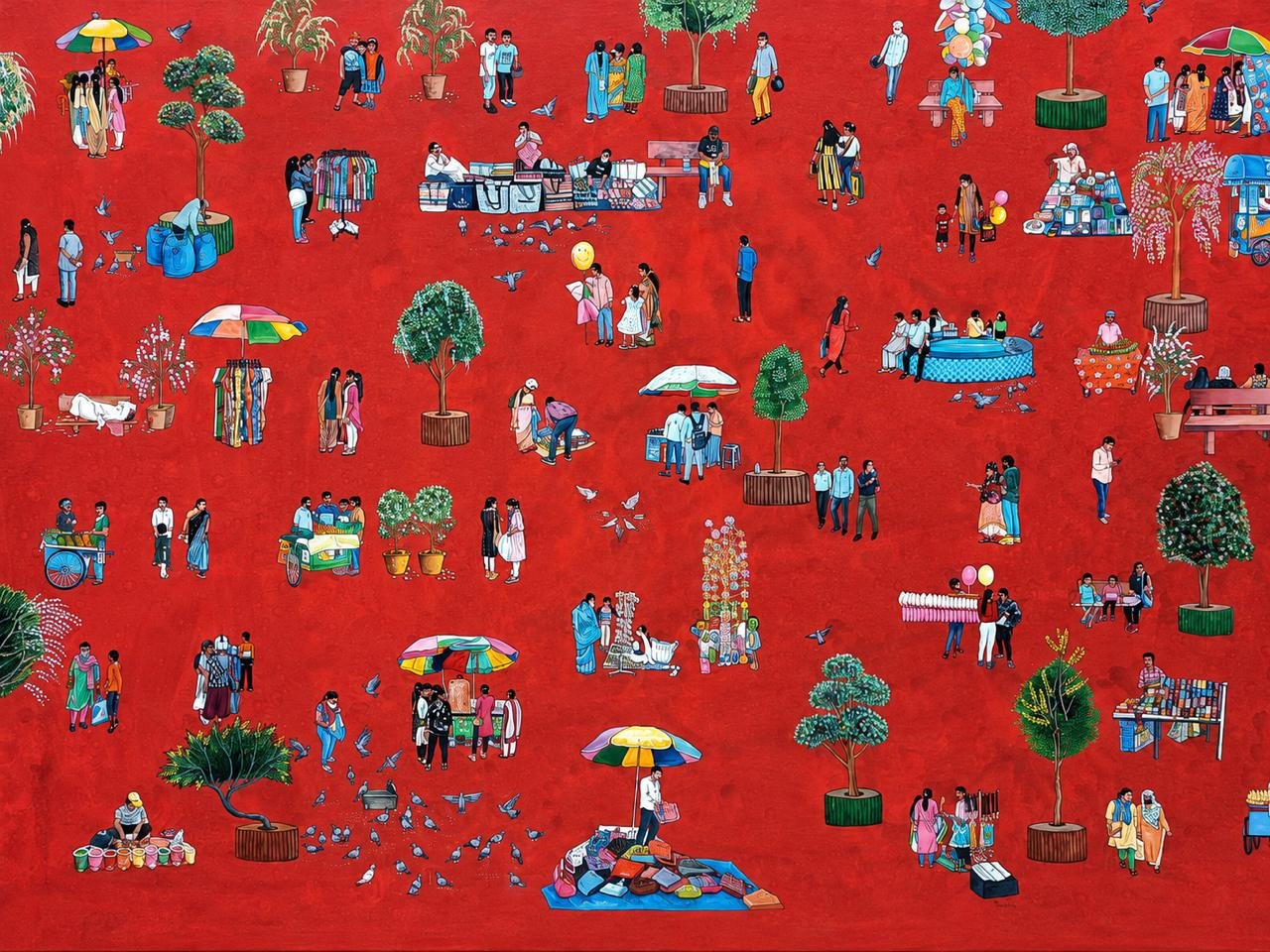
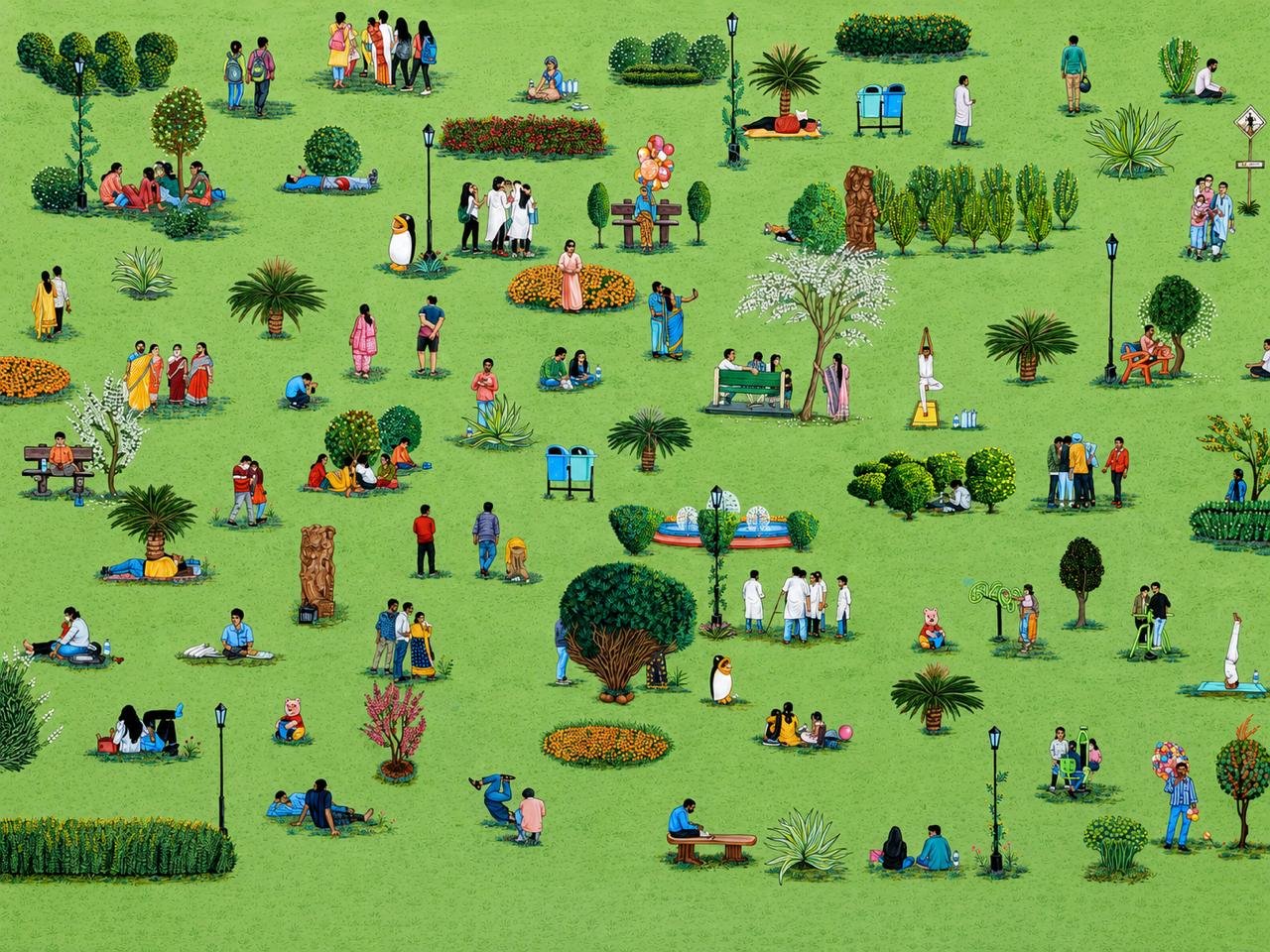
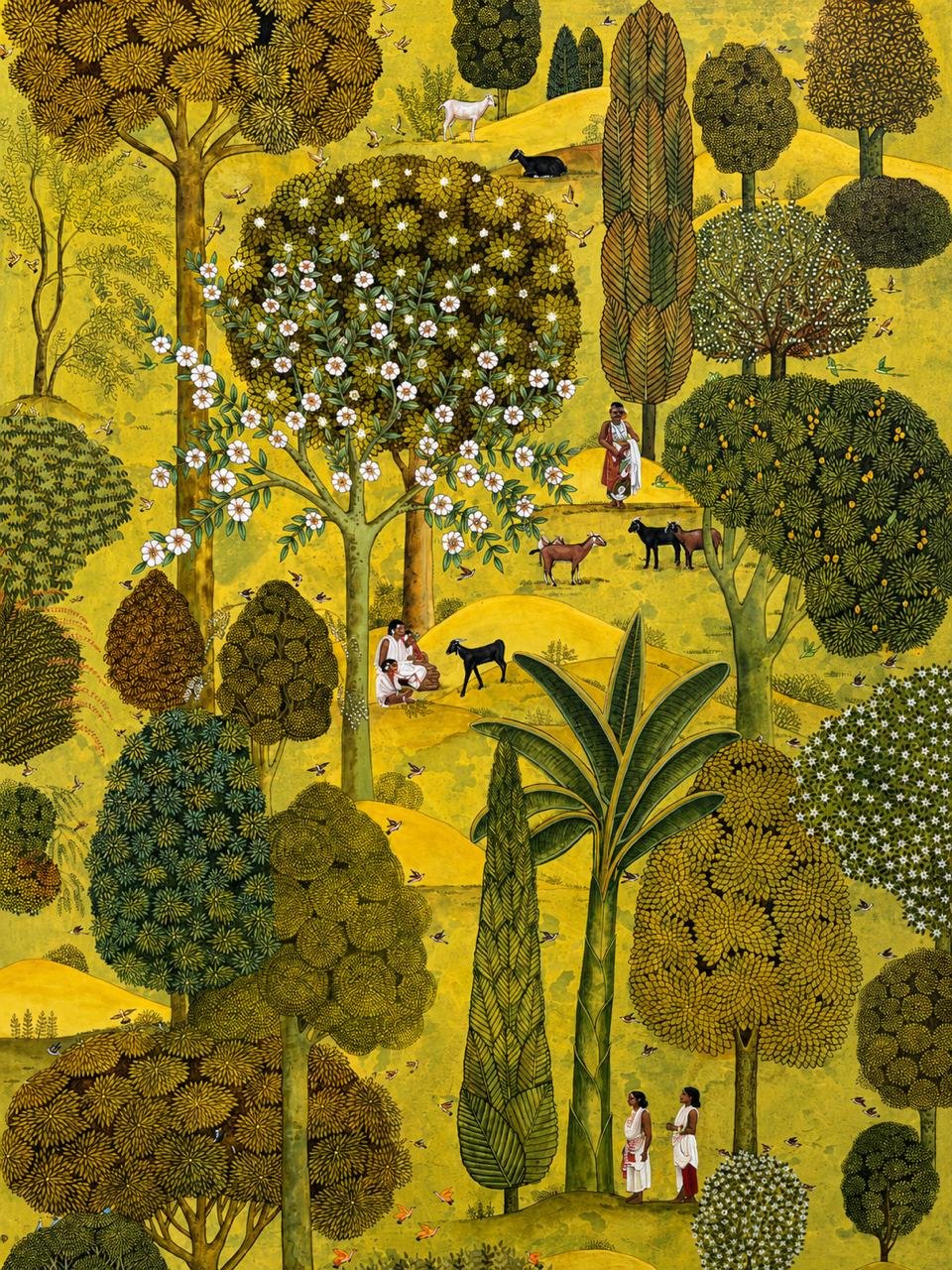
Majhi’s paintings and mixed-media works frequently include people, animals, plants, architecture and everyday activities.
These elements allow her to create contemporary visual narratives while retaining connections to cultural and environmental experience.
Her approach does not treat traditional knowledge as an isolated subject. Instead, it becomes part of a wider story involving modern life, memory and social change.
This is particularly relevant to contemporary Indian art, where artists increasingly explore how cultural identity can be maintained while societies undergo rapid transformation.
From Traditional Art to Public Art
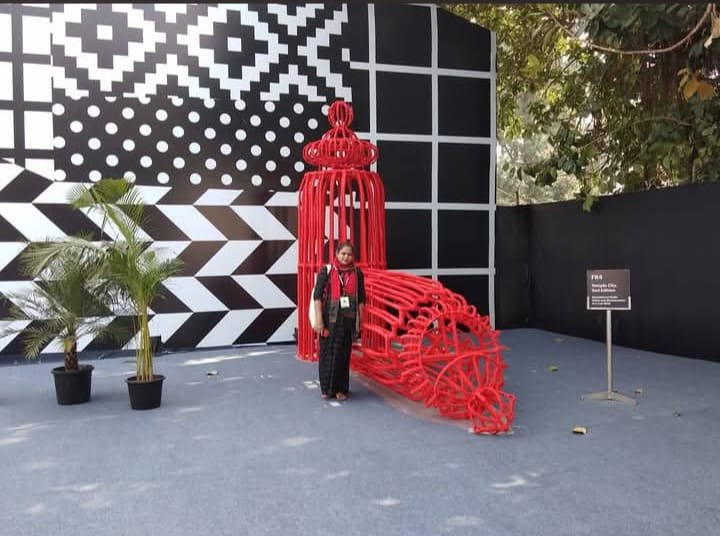
Majhi’s ability to carry cultural references into public art is another important dimension of her practice.
She has participated in murals and public-art projects in Cuttack and Bhubaneswar, as well as projects connected with major sporting and cultural events.
Her public-art activities include projects associated with the Men’s FIH Hockey World Cup, Asian athletics events and works such as Pago and Thought Loom.
Public art provides an opportunity to bring artistic and cultural ideas directly into people’s everyday environments.
Instead of being encountered only in galleries, artistic references can become part of streets and public spaces.
Traditional Knowledge and Community Participation
For Majhi, the relationship between tradition and contemporary art is also connected with participation.
Her community-based projects involve interaction with people rather than simply observing them from a distance.
This approach is visible in her engagement with indigenous communities as well as her work with children and educational institutions.
Through approximately 15 years of art education and creative-learning activities, she has encouraged children to explore their own experiences and surroundings through art.
This emphasis on observation and personal experience creates an environment in which cultural understanding can develop through creative activity.
People’s Wall: Tradition on a National Platform
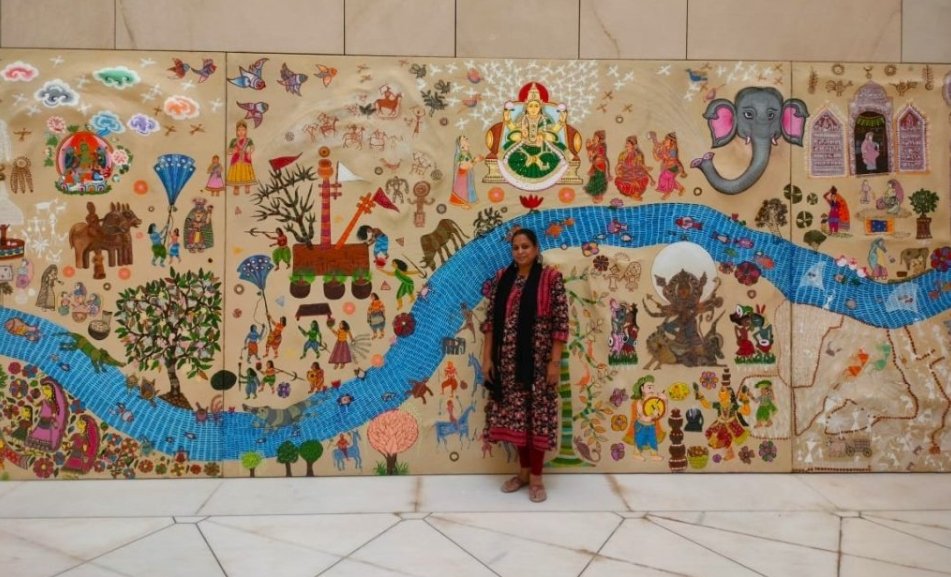
Majhi’s participation in People’s Wall – Jan, Janani and Janmabhumi in 2023 provided another important example of traditional knowledge entering a contemporary national context.
She served as a Co-Sutradhar and creative contributor to the participatory project created for the New Parliament House in New Delhi through the Lalit Kala Akademi.
The project brought together women artists and artisans from different parts of India and incorporated regional aesthetics and traditional visual languages.
Such collaboration demonstrates the continuing relevance of India’s diverse artistic traditions within major contemporary public-art projects.
Recognition of Her Artistic Practice
Majhi’s career has received institutional recognition.
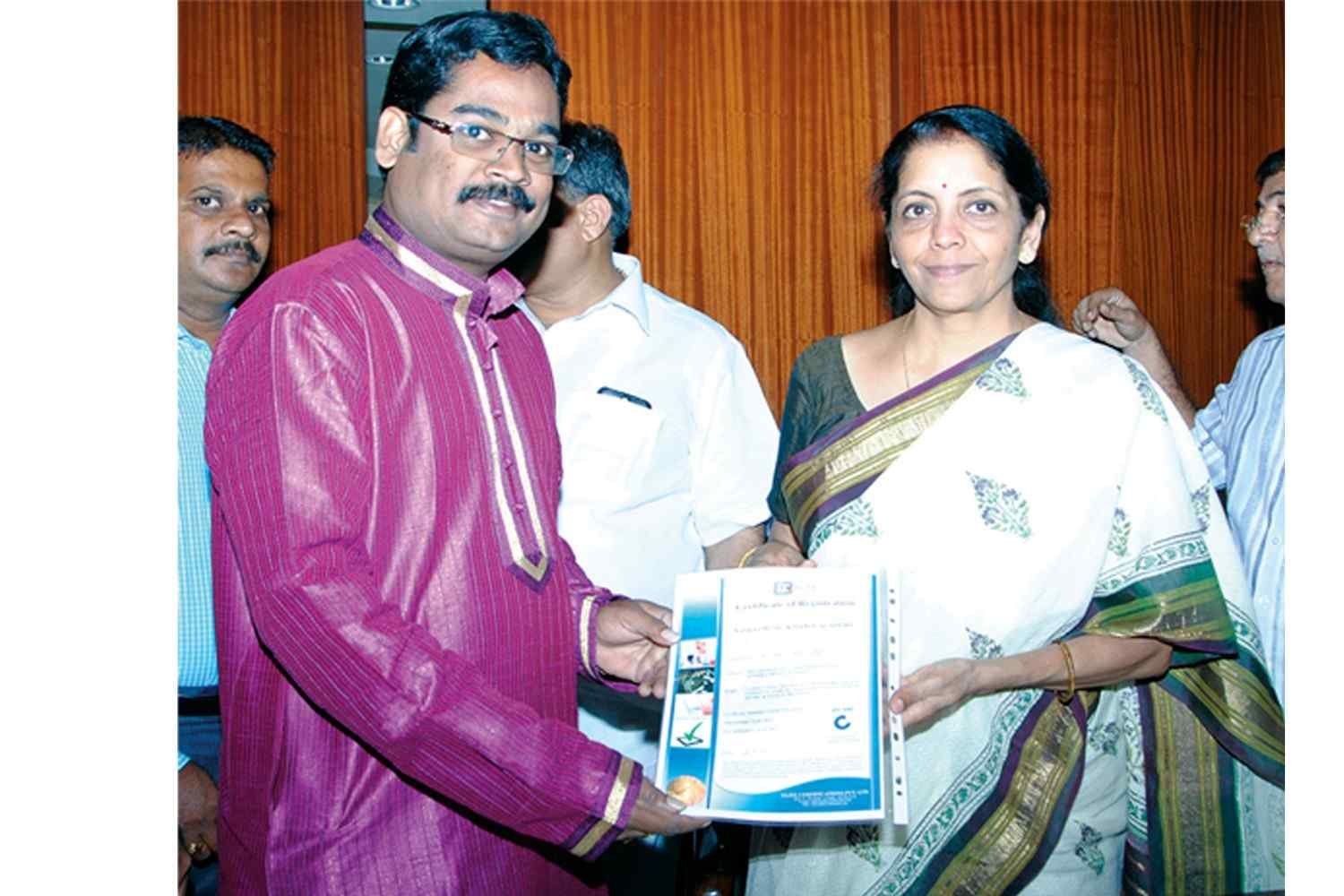
She was awarded the National Lalit Kala Akademi, New Delhi Scholarship for 2009–2010 and received the Odisha Lalit Kala Akademi State Award in 2012.
Her artistic engagements have also included institutions and initiatives such as Bharat Bhavan, Nature Morte, Lalit Kala Akademi, Odisha Lalit Kala Akademi, Bhubaneswar Art Trail and Gram Art Project, along with Vancouver Biennale-linked projects.
These opportunities have provided platforms for her multidisciplinary practice to engage with wider audiences.
A Dialogue Between Past and Present
Perhaps the most significant aspect of Majhi’s artistic approach is that she does not present tradition and modernity as opposing forces.
Instead, her work explores their relationship.
Natural pigments can exist alongside contemporary compositions. Indigenous visual references can enter modern artistic contexts. Community traditions can become part of public art. Traditional knowledge can inspire new conceptual approaches.
This creates a practice in which the past becomes a resource for understanding the present.
The Role of the Contemporary Artist
Majhi’s career also reflects a broader change in the role of the contemporary artist.
An artist can simultaneously be a creator, researcher, educator, curator and community practitioner.
Majhi’s work across these areas demonstrates how artistic practice can become a form of cultural engagement.
As Secretary of the Sasatwa Foundation, she also connects her artistic interests with wider community and social initiatives.
Her career therefore extends beyond the production of artworks and into education, collaboration and community participation.
Conclusion
Satyabhama Majhi’s artistic practice offers an example of how traditional knowledge can remain relevant within contemporary Indian art.
Her academic background in Traditional Art, long-term engagement with the Dongaria Kondh community, exploration of Niyamgiri, experiments with natural pigments and participation in public and collaborative projects all contribute to this relationship between tradition and contemporary expression.
Her work suggests that preserving tradition does not necessarily mean keeping it unchanged. Cultural knowledge can continue to evolve when artists engage with it thoughtfully and place it in dialogue with present-day experiences.
From natural materials and indigenous visual references to public murals and national collaborative projects, Majhi’s career demonstrates the creative possibilities that emerge when tradition becomes a living source of artistic enquiry.
Her practice ultimately connects past and present, landscape and culture, individual creativity and community knowledge.
In doing so, Satyabhama Majhi contributes to a contemporary Indian art landscape in which cultural heritage is not simply remembered—it is observed, questioned, reinterpreted and carried forward through new forms of artistic expression.